
Carbon fiber cloth, as one of the most revolutionary high-performance materials of the 21st century, is reshaping many fields from aerospace to daily life. This fiber material composed of 5 to 10 microns of carbon atoms has become a “black technology” star in modern engineering and design due to its excellent strength to weight ratio and unique physical and chemical properties. This article will comprehensively analyze the composition characteristics, manufacturing process, application fields, and future development prospects of carbon fiber cloth.
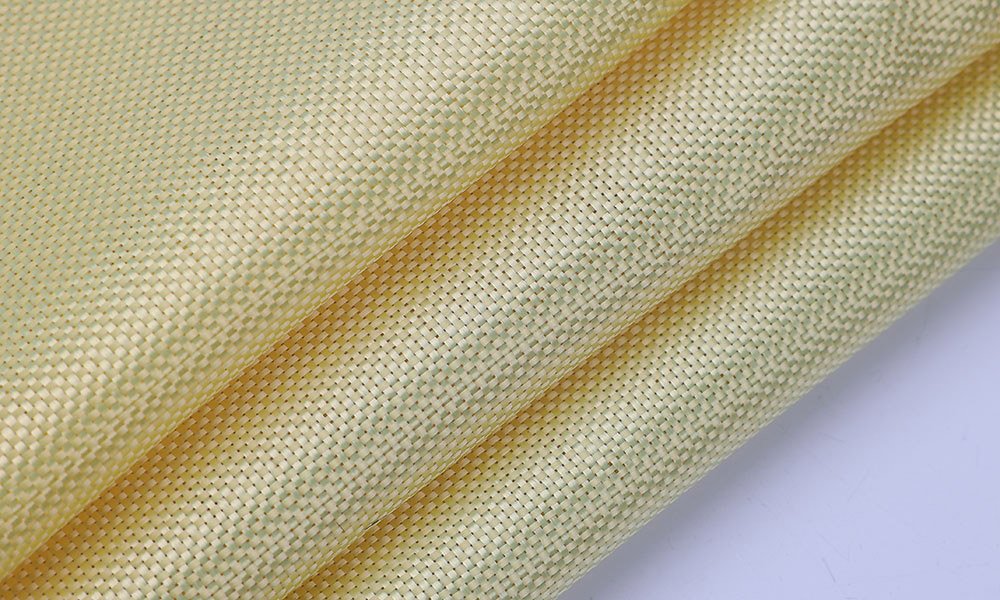
Essence and core characteristics of materials
Carbon fiber cloth is not a traditional ordinary fabric, but a high-tech composite material made by precision weaving thousands of carbon fiber bundles. It has a carbon content of over 95% and a unique two-dimensional disordered graphite structure, which endows it with extraordinary physical properties.
The perfect combination of strength and lightweight is the most striking feature of carbon fiber cloth. Its tensile strength can reach over 3000MPa, which is 7-10 times that of ordinary building steel, while its density is only about 1.7g/cm ³, which is about 30% lighter than aluminum. In practical applications, carbon fiber cloth can reduce the weight of structures by more than 70% while maintaining the same strength as steel. This characteristic makes it an ideal choice for reducing weight and improving fuel efficiency in the aerospace industry.
Carbon fiber cloth also exhibits excellent chemical corrosion resistance, with strong resistance to corrosive media such as acid, alkali, and salt, and will not undergo electrochemical corrosion like metal materials. Experiments have shown that after long-term use in strong acid and alkali environments, the strength retention rate of carbon fiber cloth remains above 95%, making it particularly suitable for harsh environments such as chemical equipment and marine engineering.
Thermal stability is another outstanding performance. Carbon fiber cloth can withstand high temperatures above 2000 ℃ in non oxidizing environments, with a thermal expansion coefficient close to zero and excellent dimensional stability. In contrast, aluminum alloys begin to soften significantly at around 150 ℃, and steel also loses strength significantly at 600 ℃.
In terms of conductivity and thermal conductivity, carbon fiber cloth exhibits anisotropic characteristics: it has excellent conductivity and thermal conductivity along the fiber direction, and is an insulator in the vertical direction. This characteristic makes it uniquely applicable in fields such as electromagnetic shielding and electrostatic dissipation.
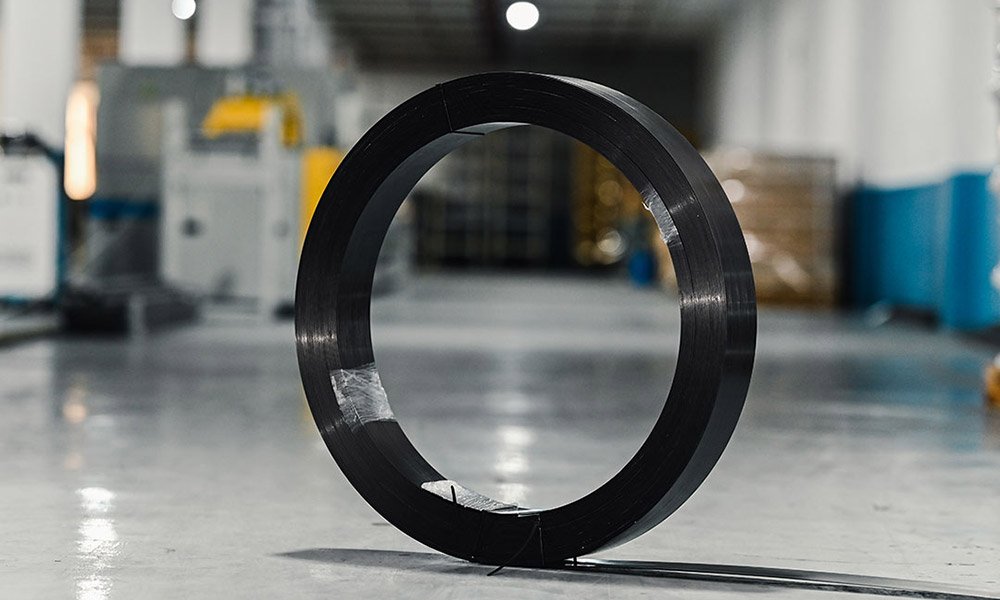
Manufacturing process and technological evolution
The manufacturing of carbon fiber cloth is a precision process that integrates textile technology and materials science. The production process begins with polyacrylonitrile (PAN) precursor or asphalt based raw materials, which are converted into carbon fibers through multiple processes such as pre oxidation, carbonization, and graphitization. The diameter of a single carbon fiber is only 5-10 microns, which is about one tenth of a human hair.
The weaving process determines the final performance and application direction of carbon fiber cloth. Common weaving methods include:
Unidirectional fabric: All fibers are arranged in the same direction, providing ultimate axial strength, mainly used in the field of structural reinforcement, with a tensile strength of over 3400MPa.
Plain weave fabric: woven with warp and weft yarns in a staggered pattern, with a smooth surface and balanced mechanical properties, suitable for complex shape forming.
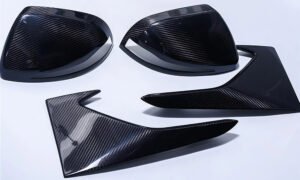
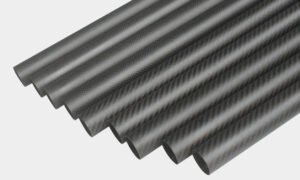
Twill fabric: The yarn is interlaced at a specific angle, combining aesthetics and formability, and is commonly used for high-end automotive components.
Satin fabric: The yarn has a longer floating length and the fabric is soft, suitable for making complex curved parts.
Pre impregnated fabric is an advanced form of carbon fiber cloth, which impregnates the woven fabric with epoxy resin or other polymer matrix under strictly controlled conditions to form ready to use composite semi-finished products. The resin content of the prepreg is precisely controlled at 35 ± 2% and needs to be stored at -18 ℃ to ensure process performance.
In recent years, the development of large bundle carbon fiber technology has significantly reduced production costs. Traditional small fiber bundles (1K, 3K, 6K) are mostly used in aerospace, while the industrial production of 24K, 48K or even larger fiber bundles has enabled carbon fiber cloth to enter large-scale application fields such as automotive manufacturing and wind turbine blades.

Cross disciplinary application panorama
The application scope of carbon fiber cloth is continuously expanding, almost penetrating all high-end manufacturing fields:
Aerospace and Defense Technology
Carbon fiber cloth is a key material for weight reduction and efficiency improvement in the aerospace industry. In the body structure of modern aircraft such as Boeing 787 and Airbus A350, carbon fiber composite materials account for over 50%. In the military field, 1K and 3K grade fine plain weave fabrics are more commonly used, combined with special resins, to manufacture fighter aircraft bodies, missile shells, satellite components, etc., which can improve stealth performance and maneuverability while reducing weight.
The Automotive Industrial Revolution
The automotive manufacturing industry has achieved a breakthrough in lightweighting by using carbon fiber cloth. The BMW i3 electric car uses a carbon fiber body, reducing weight by 250-350kg and increasing range by 15-20%. In F1 racing cars, the carbon fiber monocoque structure can withstand an impact force of 60 tons at a weight of 800kg, protecting the safety of drivers. As costs decrease, carbon fiber cloth is penetrating the mass market from mid to high end car models.
Civil engineering reinforcement
Building reinforcement is one of the fastest-growing application areas of carbon fiber cloth. The technology of using carbon fiber cloth to reinforce concrete structures reduces weight by 90% and increases construction efficiency by more than 5 times compared to traditional steel plate reinforcement methods. Actual engineering cases have shown that using 300g/m ² carbon fiber cloth to reinforce beams and columns can increase the flexural bearing capacity by 35-60%, improve seismic performance by 2-3 levels, and not affect the original use space of the building.
Sports and leisure equipment
The sports equipment field fully utilizes the high specific strength and designability of carbon fiber cloth. The top-level bicycle frame is made of high modulus carbon fiber cloth, which weighs less than 1kg but can withstand hundreds of kilograms of load. Golf clubs, tennis rackets, and fishing rods are coated with carbon fiber cloth at different angles to achieve precise performance control. Carbon fiber skis reduce weight by 30% compared to traditional materials, while increasing torsional stiffness by over 20%.
Exploring emerging fields
In the field of new energy, carbon fiber cloth is used for the main beam of wind turbine blades, which can reduce the weight of 60 meter long blades by 20-30% and improve fatigue life. In the medical field, X-ray bed boards made of carbon fiber cloth hardly attenuate radiation and have MRI compatibility. In electronic products, carbon fiber cloth shells have both electromagnetic shielding and heat dissipation functions, and are used for 5G devices and high-performance laptops.
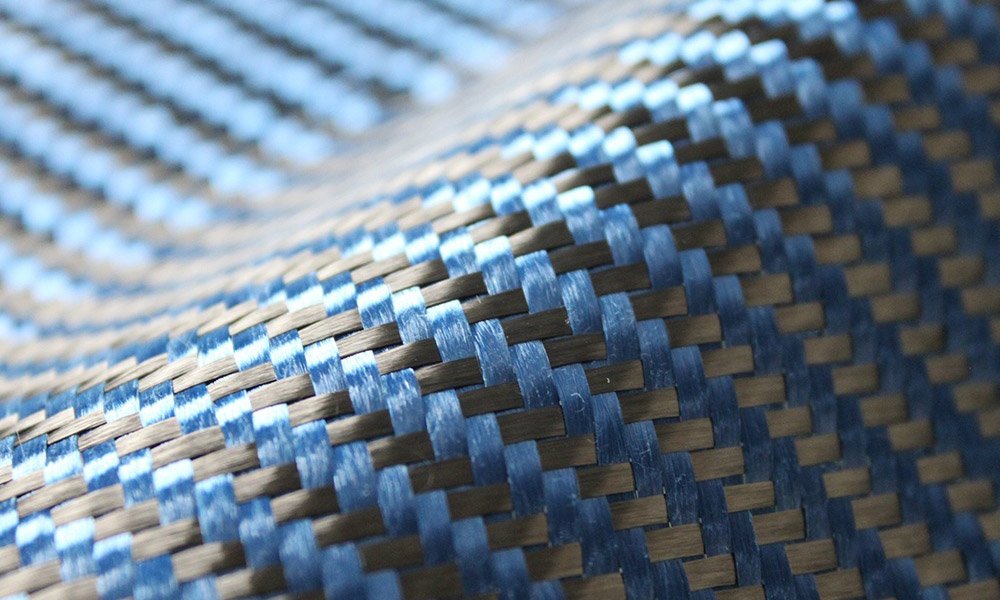
Technological Frontiers and Future Prospects
Carbon fiber cloth technology is rapidly developing towards two directions: high performance and low cost. The tensile modulus of the third-generation high-strength and high modulus carbon fiber has exceeded 600GPa, approaching the theoretical limit value. Nanotechnology modification has increased the interfacial shear strength by over 40% and significantly improved the interlayer toughness of composite materials.
Breakthroughs have been made in recycling technology, with pyrolysis and solvent methods capable of recovering over 90% of fiber strength, reducing the lifecycle cost of carbon fiber cloth by 25-30%. Digital twin technology optimizes weaving processes, reducing material waste by 15-20%.
The market prospects are extremely broad, and the global demand for carbon fiber cloth is growing at a rate of 12-15% per year. It is expected that the market size will exceed 20 billion US dollars by 2030. The main driving forces are the lightweighting and wind power generation of automobiles, and the fields of building reinforcement and pressure vessels will also maintain stable growth.
Challenges and opportunities coexist. The cost of raw materials accounts for about 50-60% of the total cost of carbon fiber cloth, and raw silk technology and large-scale production are the key to cost reduction. The digitization and intelligence of weaving equipment will further improve product consistency and production efficiency. Multi functional integration is another trend, such as the development of intelligent carbon fiber cloth that combines structural load-bearing, health monitoring, and self-healing functions.
Carbon fiber cloth is penetrating from high-end applications to daily life, and may appear in the fields of household goods, wearable devices, and even clothing in the future. With the maturity of preparation technology and the continuous decline of costs, this “black gold” is expected to change human lifestyles like plastics, promoting the transformation of global industries towards lightweight and green direction.




 English
  German
  French
  Portuguese
  Japanese
  Russian
  Italian
  Spanish
  Arabic