
What makes carbon fiber one of the most transformative materials of our era? This extraordinary composite—made up of thin carbon atom strands linked in a crystalline structure—has completely redefined how we approach material design and engineering. Its unbeatable combination of exceptional strength, remarkable lightness, and impressive durability has put it at the very forefront of innovation in material science.
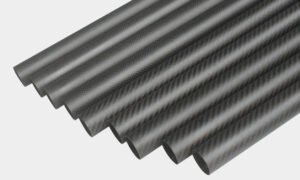
So how exactly is carbon fiber made? The process starts with precursor materials—most commonly polyacrylonitrile (PAN) or pitch—that are heated to blistering temperatures in an oxygen-free setting. This carbonization step turns the precursor into long carbon atom chains, creating fibers that boast five times the tensile strength of steel but only a third of the weight. To make advanced carbon fiber composites, these fibers are then embedded in a polymer matrix—a process that lets manufacturers tailor the material to meet specific application needs precisely.

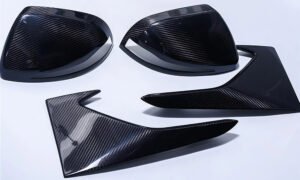
Where is carbon fiber making the biggest difference? The aerospace industry has felt this revolution most acutely, as the material lets aircraft makers cut weight without sacrificing structural integrity. Companies like Boeing and Airbus now use carbon fiber in over 50% of their aircraft structures, translating to fuel efficiency gains of up to 20%. In the automotive world, carbon fiber has redefined high-performance vehicles, delivering unprecedented speed and handling while reducing environmental impact through better fuel economy.
But for all its strengths, carbon fiber still faces significant challenges. The biggest hurdles? High production costs, complicated recycling processes, and energy-intensive manufacturing. Traditional carbon fiber production requires temperatures above 1,500°C, which guzzles energy. Recycling is also a major headache—separating the polymer matrix from the fibers without damaging their structural integrity is no easy feat.
Looking forward, though, the future of carbon fiber is bright. Researchers are already working on more sustainable production methods, including bio-based precursors and lower-temperature processes. In my own work with advanced materials, the most exciting developments are happening at the crossroads of carbon fiber technology and digital manufacturing. 3D printing now allows for the creation of complex carbon fiber structures that were once impossible to make—opening up new possibilities for customized, high-performance components across industries.
As carbon fiber technology continues to advance, its potential uses feel almost boundless. From medical implants that integrate seamlessly with human tissue to infrastructure components that can withstand extreme environmental conditions, carbon fiber isn’t just improving on existing materials—it’s unlocking entirely new possibilities in engineering and design. The ongoing innovation in this field holds real promise for addressing some of humanity’s most pressing challenges through material science.





 Russian
  English
  German
  French
  Portuguese
  Japanese
  Italian
  Spanish
  Arabic