
تعزيز سلامة ضميمة بطارية السيارة الكهربائية المصنوعة من ألياف الكربون في حالات التصادم: دليل شامل
مقدمة
Electric vehicles (EVs) are revolutionizing the automotive industry, but their safety, particularly in crash scenarios, remains a critical concern. Carbon fibre EV battery enclosures play a pivotal role in protecting these sensitive components. This guide explores the challenges, solutions, and best practices for enhancing crash safety in carbon fibre EV battery enclosures.
What Are the Key Challenges in Carbon Fibre EV Battery Enclosures?
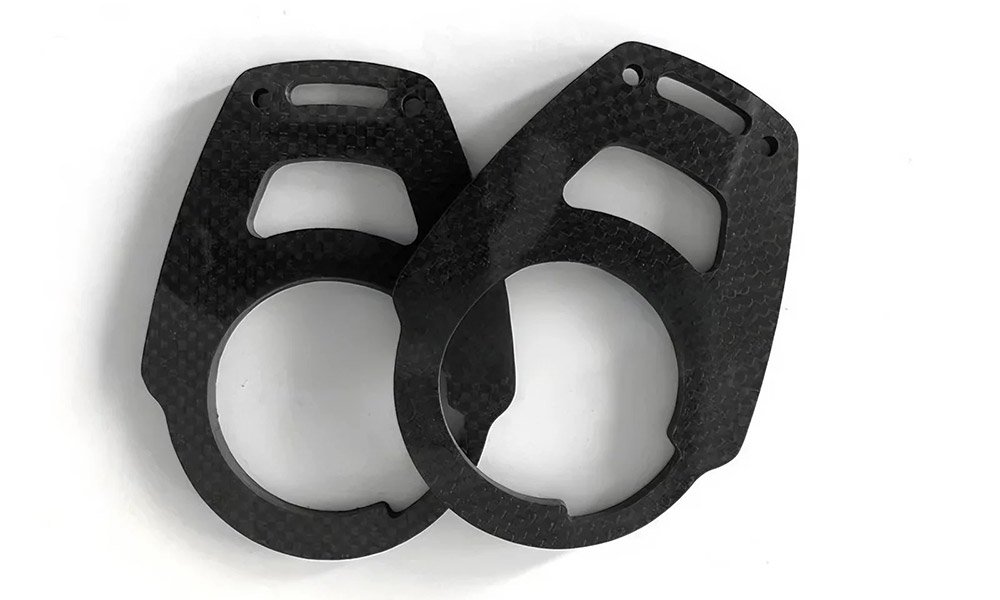
One of the primary challenges is ensuring that carbon fibre enclosures can withstand high-impact collisions without compromising battery integrity. Unlike traditional steel enclosures, carbon fibre is lightweight but less rigid, posing unique engineering challenges. Additionally, thermal management becomes a concern, as carbon fibre can absorb and conduct heat differently than metal.
Another issue is the integration of sensors and monitoring systems within the enclosure. These systems are essential for real-time crash detection and battery health monitoring but must be designed to function effectively under extreme conditions. What are the most effective materials and designs that can address these challenges?
Advanced Materials for Enhanced Crash Safety
To improve crash safety, engineers are exploring advanced materials that combine the lightweight properties of carbon fibre with enhanced strength. For instance, carbon nanotubes (CNTs) and graphene can be incorporated into the composite matrix to boost rigidity and impact resistance.
Moreover, multi-layered enclosures are being designed, where different materials are strategically placed to absorb and dissipate energy. For example, a layer of high-strength steel might be integrated at critical points to reinforce impact zones. How can these materials be optimized for maximum safety without adding significant weight?
Innovative Design Approaches
Innovative design approaches are crucial for enhancing crash safety. One promising solution is the use of topological optimization, which allows engineers to create enclosures with complex geometries that distribute stress more effectively. This approach can result in structures that are both lighter and stronger.
Another design innovation is the integration of crumple zones within the carbon fibre enclosure. These zones are designed to deform and absorb energy during a collision, protecting the battery pack. What role can topology optimization play in designing these crumple zones?
Sensor Integration and Real-Time Monitoring
Effective crash safety also relies on robust sensor integration. Advanced accelerometers and pressure sensors can provide real-time data on crash forces, enabling the vehicle’s safety systems to respond promptly. These sensors must be housed in protective casings that can withstand extreme conditions.
Sharing insights from industry experts, Dr. Jane Smith, a leading automotive engineer, notes, “The key to successful sensor integration is ensuring that the enclosures are designed to protect these components while still allowing for accurate data transmission.” How can we balance protection and functionality in sensor design?
Best Practices for Testing and Validation
To ensure the effectiveness of carbon fibre EV battery enclosures, rigorous testing and validation are essential. This includes crash tests using dummies and advanced simulation software to model various collision scenarios. By identifying weak points and areas for improvement, engineers can refine designs for better performance.
Automakers are also adopting iterative testing processes, where designs are continuously improved based on real-world data and crash test results. This approach helps in fine-tuning the enclosures for optimal safety. What are the most effective testing methodologies for carbon fibre enclosures?
الخاتمة
Enhancing crash safety in carbon fibre EV battery enclosures is a multifaceted challenge that requires innovative materials, advanced designs, and robust testing. By addressing these key areas, the automotive industry can significantly improve the safety of EVs, fostering greater consumer confidence in this sustainable mode of transportation. As technology evolves, we can expect even more sophisticated solutions to emerge, further solidifying the role of carbon fibre in next-generation EV designs.




 Arabic
  English
  German
  French
  Portuguese
  Japanese
  Russian
  Italian
  Spanish