
(1)Definition and principle of action
1. Material characteristics and reinforcement mechanism
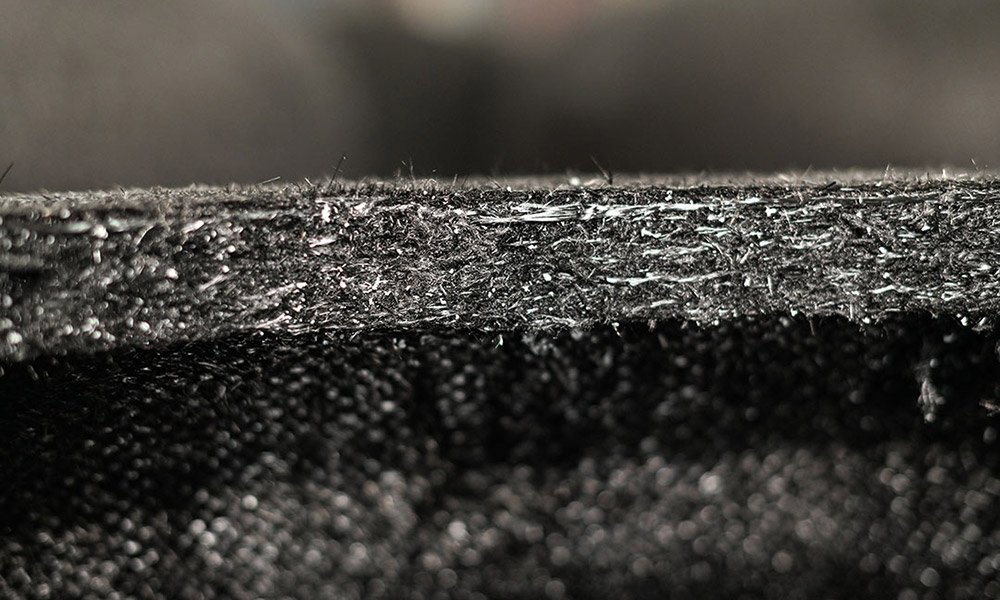
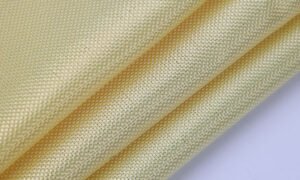
Carbon fiber cloth has the characteristics of high strength (tensile strength 4400MPa), lightweight, and corrosion resistance. When combined with epoxy adhesive, it forms a reinforcement layer and works together with the surface of concrete components to improve the structural stress state.
Main function: To enhance the bending, shear, seismic performance and bearing capacity of components, suitable for the reinforcement needs of concrete components such as beams, slabs, columns, etc.
2. Applicable components and reinforcement objectives
Applicable components: various structures such as beams (top/bottom tensile zone bending resistance), slabs, columns (circumferential spiral adhesive shear resistance), etc.
Reinforcement objective: To solve the problem of insufficient bearing capacity of old house balconies, meet the safety requirements of major engineering structures, and extend the service life of buildings.
(2) Construction process and operation points
1. Grassroots treatment standards
Chisel off the surface decorative layer and plaster layer, clean up floating dust, repair cracks with pressure grouting, and repair loose parts with epoxy mortar.
Surface leveling: Fill the concave parts with repair glue, treat the corners into arcs with a radius of not less than 10mm, and grind the protruding parts with a grinding wheel to ensure the flatness of the base layer.
2. Colloid and cloth pasting process
Apply primer: Apply interface agent and adhesive evenly, wait for curing before proceeding to the next process, and use the primer within 40 minutes.
Paste carbon fiber cloth: Cut according to the design size, apply adhesive after scraping, roll and exhaust along the direction of force, overlap length 100mm, and anchor length not less than 600mm when in tension.
Multi layer bonding: The next layer of bonding should be completed before the previous layer of adhesive is dry or within an interval of no more than 60 minutes. Finally, the surface adhesive should be scraped and surface protection should be applied.
(3) Quality acceptance and precautions
1. Key acceptance indicators
The size is consistent with the design, and the node structure meets the requirements of the specifications.
Hollow drum and glue leakage inspection: If the area of a single hollow drum is less than 10000 square millimeters, it can be repaired by injection; If it exceeds this area, it needs to be cut off and rebuilt; The thickness of the adhesive layer needs to be measured at the thickest and thinnest points.
Bonding strength requirement: The concrete strength of the original component shall not be less than C15, and the tensile bonding strength shall not be less than 1.5MPa.
2. Construction safety and material management
Carbon fiber cloth is conductive, and construction should be kept away from electrical equipment to avoid bending; Colloid storage should be well ventilated and kept away from sources of fire.
During construction, it is necessary to remove or mostly remove live loads, and the strength of the base concrete should not be lower than C15.
Construction personnel need to take labor protection measures such as dust prevention and colloidal contact prevention.

(4)Typical application scenarios and cases
1. Building engineering reinforcement
Old house balcony: Taking advantage of its light weight and short construction period, it enhances its bearing capacity while maintaining its structural form.
Major projects such as aerospace buildings and subways are reinforced with carbon fiber cloth to ensure structural safety and durability.
2. Cultural heritage protection
Restoration of ancient buildings: Pre stressed carbon fiber cloth technology is used to achieve seamless restoration, significantly increasing seismic fortification intensity and solving the problem of insufficient anchoring force of traditional iron hoops.
3. Bridges and transportation facilities
Highway bridges: Carbon fiber reinforcement can reduce their own weight by 55%, lower carbon dioxide emissions, adapt to the large tonnage tensioning needs in narrow spaces, and enhance their bearing capacity and stiffness.




 Arabic
  English
  German
  French
  Portuguese
  Japanese
  Russian
  Italian
  Spanish